Goal 4 – Sustainable Textiles Switzerland
Transparency.
Transparency to ensure that sustainable purchasing decisions can be made.
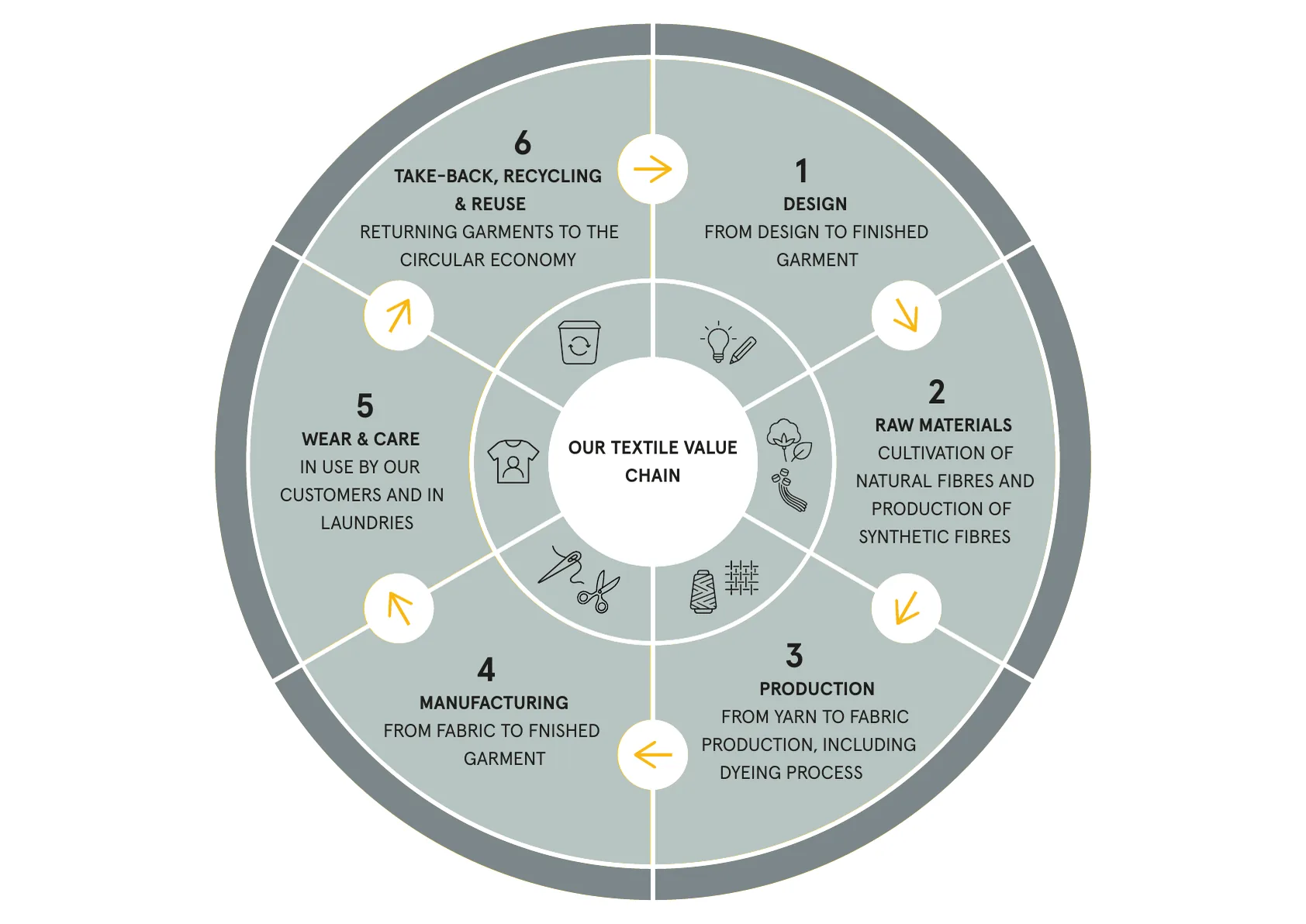
We disclose our entire value chain, from raw material extraction through spinning, weaving, knitting and dyeing to sewing – so that you can make responsible decisions.

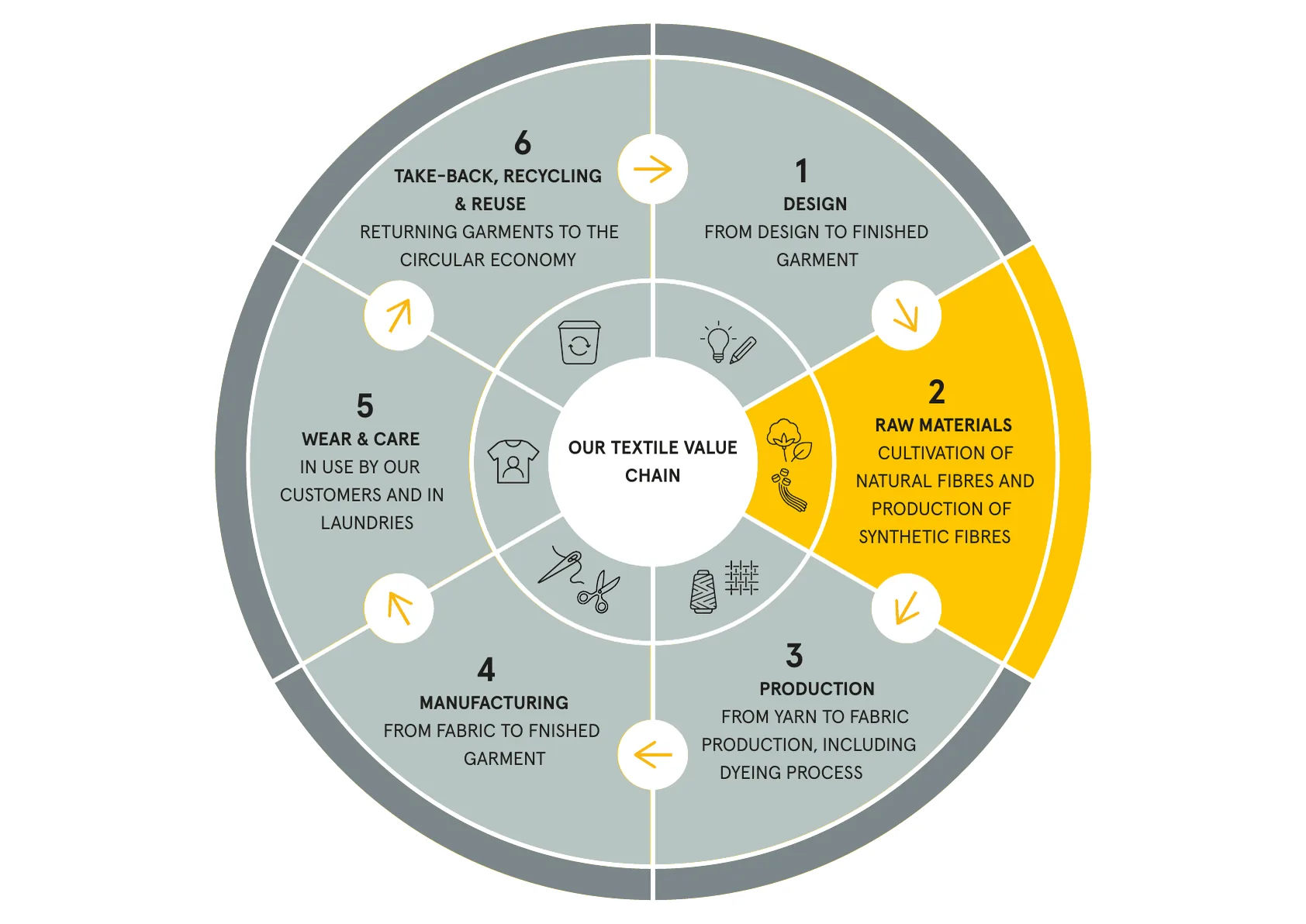
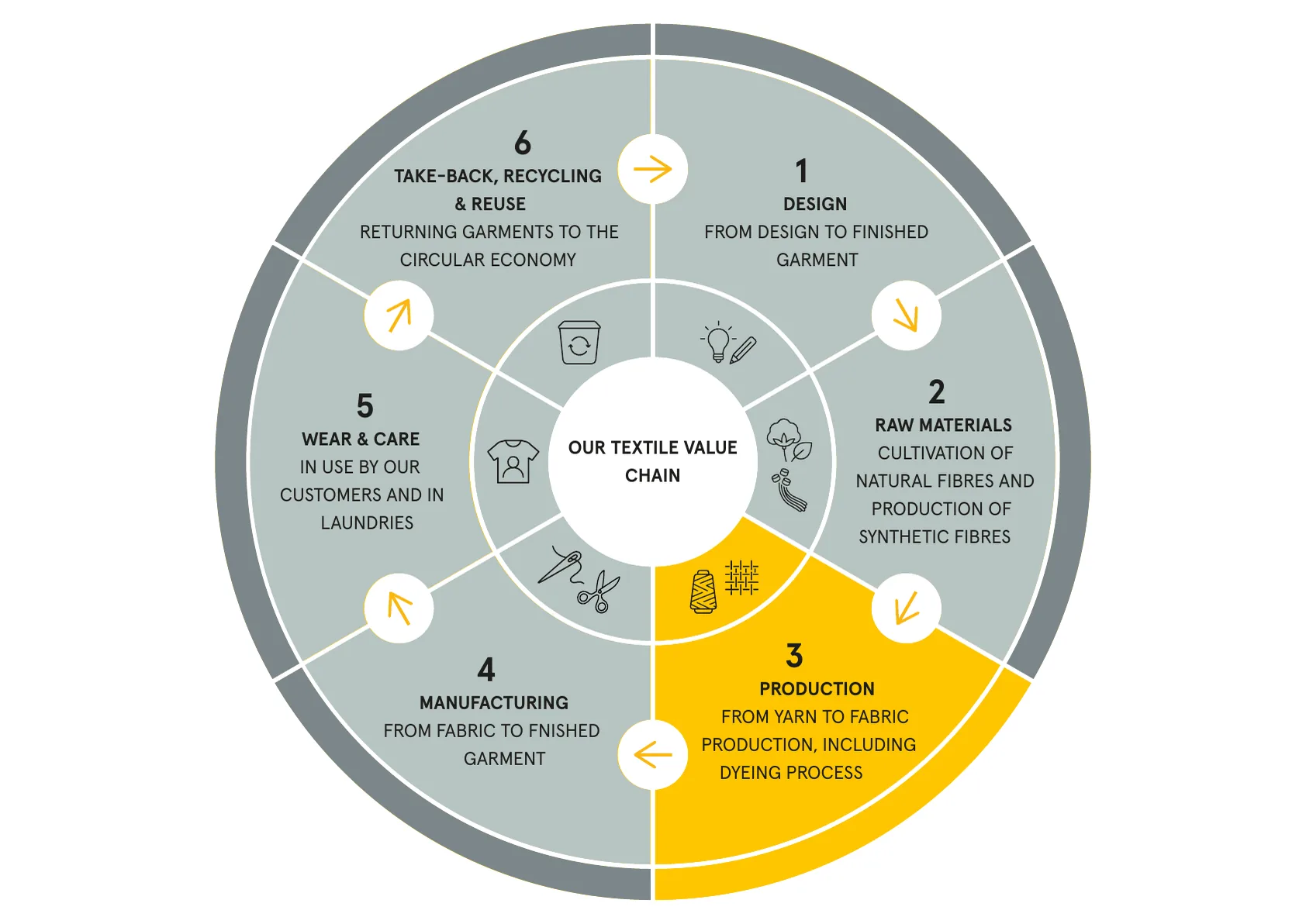
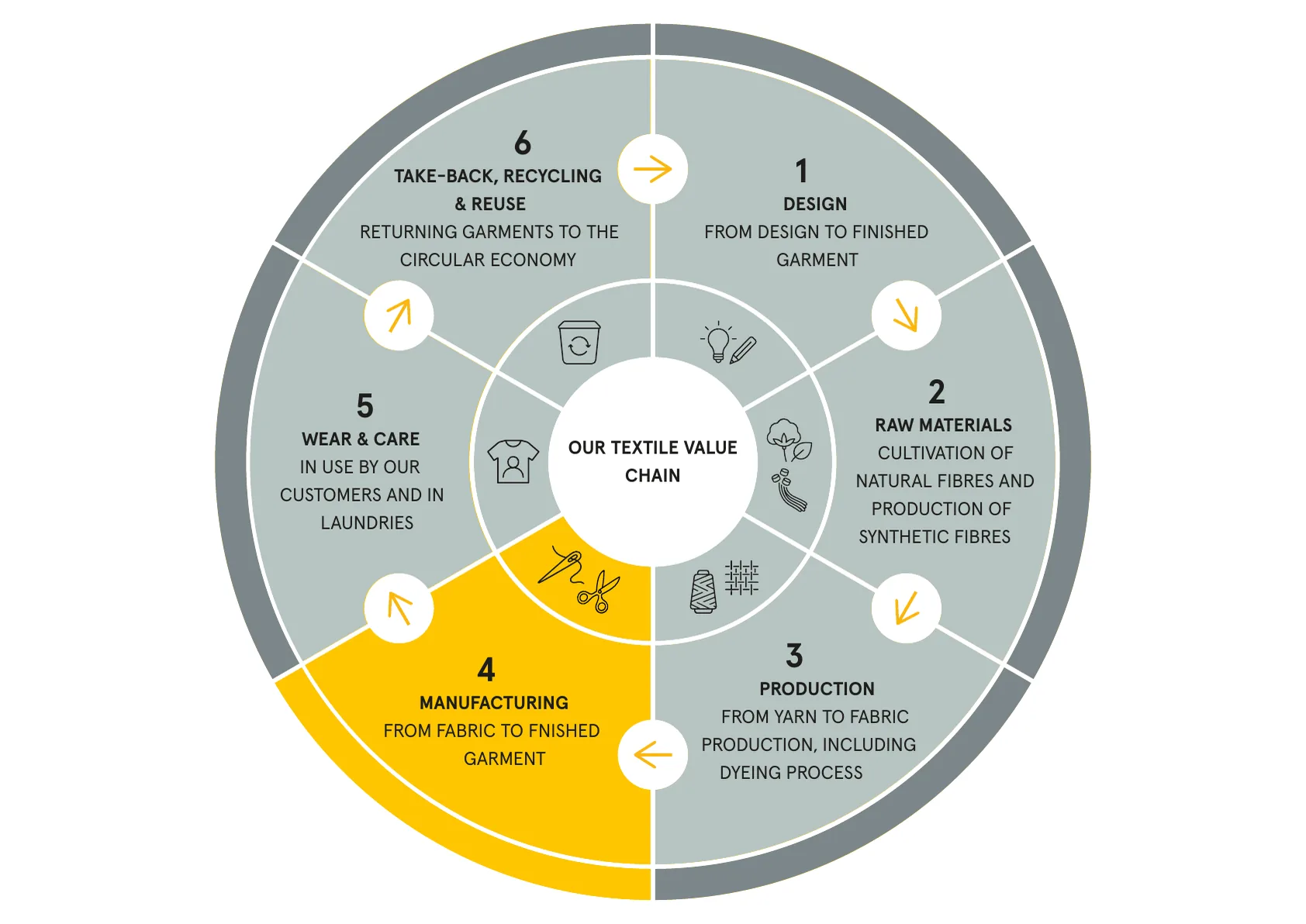
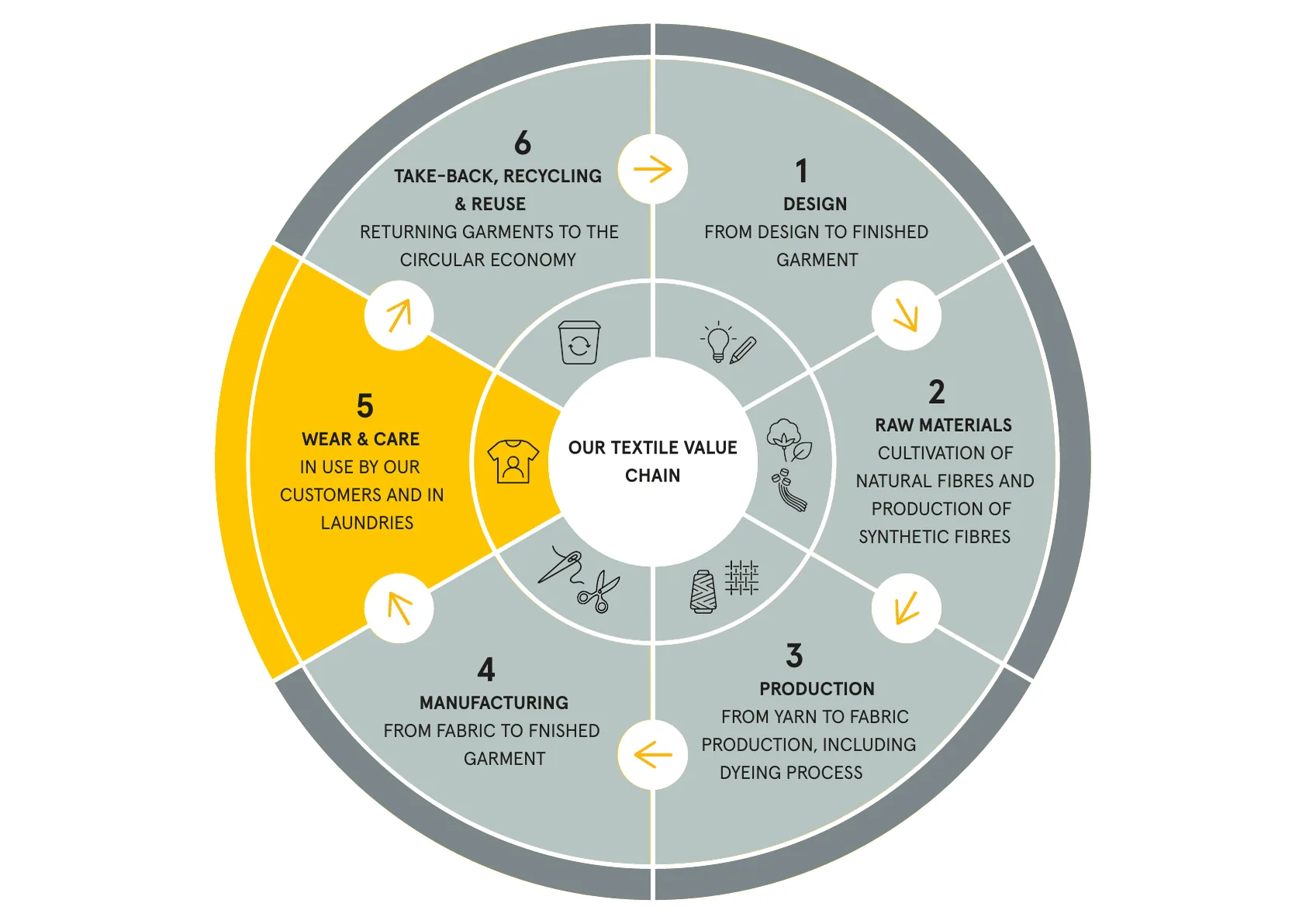
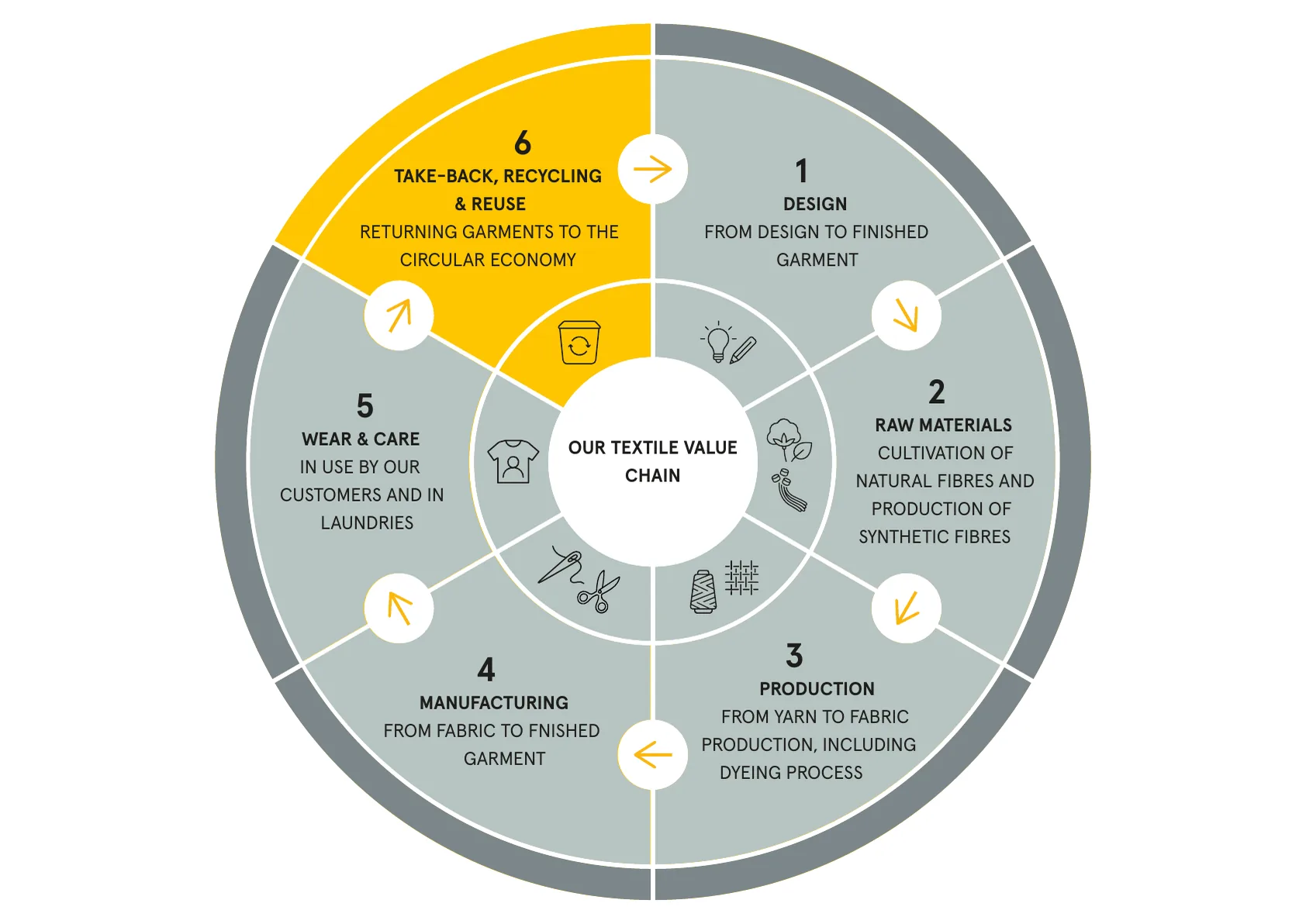
Two products, two paths.
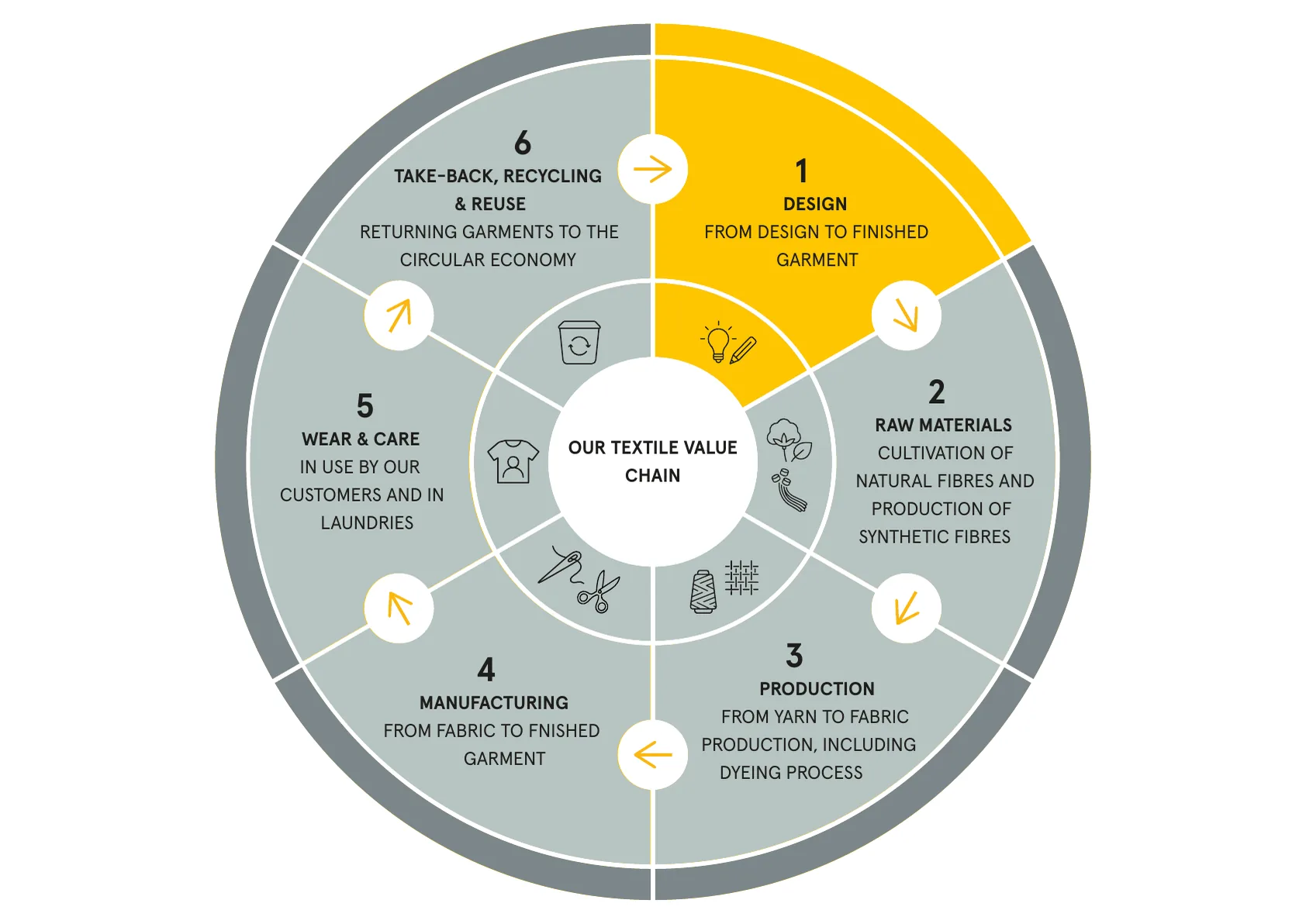
The value chain shows where our products are made. Using the example of a pair of work trousers and a polo shirt, we disclose the path that fibre, yarn and fabric take to reach you.
On request, we can transparently show our customers the entire textile value chain of the workwear they use. Get in touch with us!Work trousers
Woven fabric · 65% polyester, 35% cotton
Polo shirt
Knitted piqué · 55% cotton, 45% polyester
Our standards and memberships





Labels for selected fabrics and yarns
Together with our fabric suppliers, we use raw materials with these quality labels in selected fabrics and yarns.

These labels do not apply to our entire range or to the entire value chain.
Knowing what's inside.
Openness as the basis for your decision
Anyone procuring workwear needs reliable information. That is why we disclose where our fabrics and trims come from: we source 99% from Europe, and production takes place exclusively at audited partners.
On request, we can currently show you the value chain for all our products. In future, our aim is to use a QR code and product passport in the textile product to provide access to social and environmental information on the product for at least 90% of our products, and additionally on the production sites by 2028. This page is part of that: it continuously makes our strategy, our measures and our progress visible.
Our goal by 2030
Implementation together with customers and suppliers, so that responsible purchasing decisions become possible.
Where we stand today
Our sustainability landing page, based on the four STS goals, is updated monthly with the latest project updates, goals and challenges. With this transparency, we want to keep all stakeholders regularly informed and also share our successes, challenges and occasional setbacks. Sustainable commitment means constantly staying on the move, not growing tired and finding ways, even without large budgets, and actively living networked thinking internally and externally! Internally, this means training all employees to know the STS goals, understand the connections and carry this commitment through to our customers. The aim is to advise our customers competently on the materials, origin and circularity of textiles and to empower them to champion durable workwear with their decision-making bodies. Our customers can currently request the textile value chains for their products and the social and environmental production standards directly from us at any time. In future, however, this should be possible directly via a QR code in the textile product, such as a product passport. We are currently examining various options as part of a product passport tool. The aim is to link data from our ERP and quality management system Qarma, as well as audit and test reports on social and environmental standards across the entire textile value chain, in a product passport tool. We are evaluating these tools in order to decide on an efficient solution. We are currently in close exchange with other STS members who have already implemented pilot projects with product passport tools.
Our challenge
Collecting social and environmental information across the entire supply chain and keeping it up to date is demanding, but thanks to our long-term partnerships it is already possible today, from manufacturing and fabric production through to the use of raw materials. However, as an SME, maintaining this for the wide variety of our workwear in one system and product passport tool involves considerable effort. It requires the participation of every single supplier and resources throughout the entire textile value chain.
of the fabrics and trims we use are sourced from Europe
of our products are all to have a traceable product passport down to the yarn used by 2028.
was when we committed to the goals of Sustainable Textiles Switzerland
How we put it into practice.
The circles show the degree of implementation from our 2025 progress measurement. An amber remainder means that we are behind schedule on this measure. You will find the complete analysis with all interim results further down.
4.1
Information policy
We disclose our sustainability strategy, our supply chain policy, our measures and our achievements.
Implemented
4.2
Sharing knowledge
We contribute to better knowledge of the social and environmental aspects of textile products.
Implemented
4.3
Product information
We provide access to social and environmental information on our products and production sites.
In progress
The results of the progress measurement are based on workfashion's own information as a committed actor and represent an internal assessment by the Sustainable Textiles Switzerland programme. No audit has been carried out by the programme.
The goal for the Swiss textile and clothing industry
By 2030, 80% of the Swiss textile and clothing industry will disclose social and environmental sustainability information.

The measures for committed actors
Within 18 months, committed actors establish a proactive information policy and disclose their sustainability strategy, supply chain policy, measures and achievements.
Within 24 months, they take measures to contribute to better knowledge about the sustainability aspects of textile products.
They provide access to sustainability information on the product for at least 80% of their products by 2025, and on the production sites by 2028.
The complete analysis.
Would you like to see our progress measurement in detail? Leave your email address and you will receive the complete analysis as a PDF.

Contact.
Do you have any questions about sustainability? We will be happy to help you. Contact us.
Diane Gerth
Head of Sustainability | Product Management | Marketing
NACHHALTIGKEIT@WORKFASHION.COM+41 41 784 84 77