SUSTAINABILITY
Shaping the future responsibly.
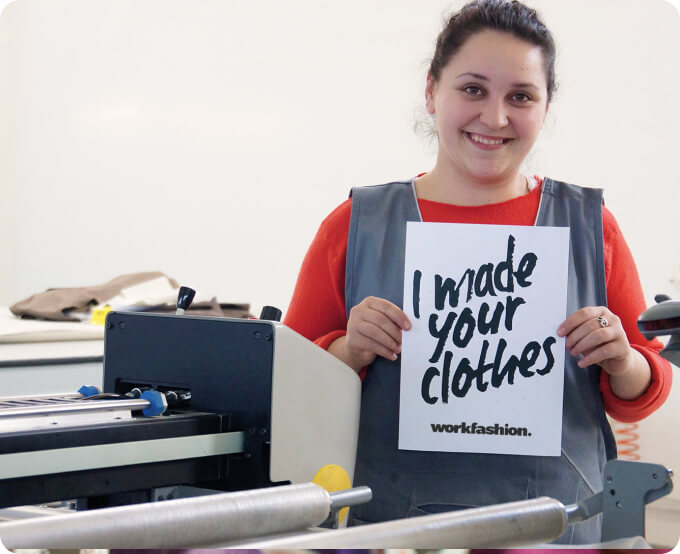
At workfashion, sustainability is at the heart of everything we do every day. We believe that we are a small part in a large ecosystem. Our approach is based on the three pillars of sustainability - social fairness, ecological responsibility, and economic viability. These are the principles that guide every decision we make, and they underscore our endeavours to be the pioneer of sustainable professional workwear in Switzerland.
Sustainability report



Social fairness.
Work fashion for sustainability
Working with well-known organisations such as amfori BSCI, we are committed to improving working conditions such as fair wages, safe workplaces and reasonable working hours along our entire supply chain. Both these organisations set high standards which we strive to achieve. The coming years will bring even higher requirements to meet. Higher transparency quotas, in-depth risk analyses and the implementation of due diligence obligations are just some of the challenges we will face. We continue to stand up for fair business practices.
Ecological responsibility.
Promote circular economy and reduce CO₂ emissions
Our commitment to the environment manifests itself in our active contribution to promoting the circular economy and reducing our carbon emissions. We are proud to be part of the Sustainable Textiles Switzerland programme, which is dedicated to achieving the Sustainable Development Goals.
Economic viability.
Sustainability as a business model
For us, sustainable business means creating long-term value that goes beyond financial success. By integrating sustainable behaviour into our everyday life along the textile value chain, we are helping to ensure that our commitment to our community and our planet pays off.
Sustainability goals.
With our fairly manufactured products, we take responsibility for the world of tomorrow.
GOAL 1
Reduction of greenhouse gas emissions.
By, the greenhouse gas emissions of the Swiss textile and clothing industry will be reduced by 50% with a view to a net zero target by 2050.
GOAL 2
Promoting fair wages and decent work for all.
By, 100% of the Swiss textile and clothing sector will be implementing its due diligence obligations throughout the supply chain, with a focus on working hours, forced labour, child labour and sexual harassment.
GOAL 3
Promoting innovative business models towards a circular economy.
By, at least 30% of sales in the Swiss textile and clothing sector will be generated with products designed according to the principles of the circular economy.
GOAL 4
Transparency to support sustainable purchasing decisions.
By, 90% of the Swiss textile and clothing industry will disclose social and environmental sustainability information and contribute to raising consumer awareness.
Sustainability goals.
With our fairly manufactured products, we take responsibility for the world of tomorrow.
GOAL 4
Transparency to support sustainable purchasing decisions.
By, 90% of the Swiss textile and clothing industry will disclose social and environmental sustainability information and contribute to raising consumer awareness.
GOAL 1
Reduction of greenhouse gas emissions.
By, the greenhouse gas emissions of the Swiss textile and clothing industry will be reduced by 50% with a view to a net zero target by 2050.
GOAL 2
Promoting fair wages and decent work for all.
By, 100% of the Swiss textile and clothing sector will be implementing its due diligence obligations throughout the supply chain, with a focus on working hours, forced labour, child labour and sexual harassment.
GOAL 3
Promoting innovative business models towards a circular economy.
By, at least 30% of sales in the Swiss textile and clothing sector will be generated with products designed according to the principles of the circular economy.
GOAL 4
Transparency to support sustainable purchasing decisions.
By, 90% of the Swiss textile and clothing industry will disclose social and environmental sustainability information and contribute to raising consumer awareness.
GOAL 1
Reduction of greenhouse gas emissions.
By, the greenhouse gas emissions of the Swiss textile and clothing industry will be reduced by 50% with a view to a net zero target by 2050.
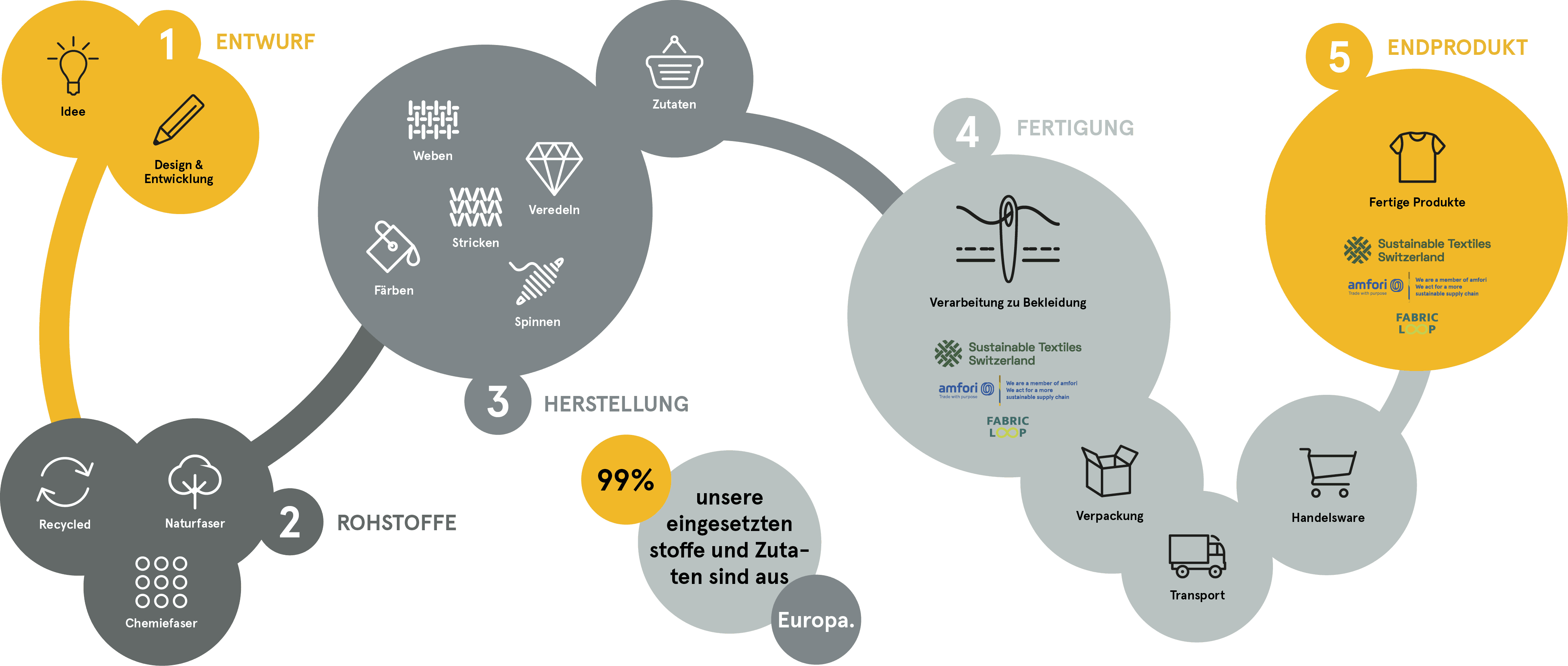
From the initial idea to the finished product.
At workfashion we understand that sustainability means working energetically together, starting with the first spark of an idea and ending with the finished product - and beyond. Find out how we develop, source and manage to create clothing that protects the body and the environment.
01.
Development.
Our designs combine aesthetics with function. Innovative materials and sustainable design principles ensure that the products we create are durable, repairable - and recyclable.
02.
Sourcing.
We select our suppliers carefully to ensure that they share our high standards concerning working conditions, environmental protection and ethical business practices.
03.
Management.
With an efficient logistics operation and a sophisticated inventory control system, we minimise example how waste throughout the entire life cycle of our products.

Contact.
Do you have any questions about sustainability? We will be happy to help you. Contact us.
Diane Gerth
Head of Sustainability | Product Management | Marketing
NACHHALTIGKEIT@WORKFASHION.COM+41 41 784 84 77
Together for a better future.
Our journey to sustainable workwear is an ongoing process that requires collaboration, innovation and commitment. We are grateful for the support of our partners, customers and the entire workfashion team. Together we are creating a future that we can all be proud of.